Automated Process Operations
Neural network-based prediction, real-time diagnosis and automated adjustment. The system helps respond rapidly to process deviations before they escalate into compliance events.
AquaX Robot™ is the central AI operations hub for 24/7 monitoring, decision support and automated control. Neural-network models predict, diagnose and recommend or execute adjustments under configurable operating rules.
AquaX Robot™ combines process control, predictive maintenance, environmental monitoring and site-safety intelligence into one operating layer for water treatment plants.
Neural network-based prediction, real-time diagnosis and automated adjustment. The system helps respond rapidly to process deviations before they escalate into compliance events.
Multimodal AI models continuously analyse equipment behaviour for early fault detection and anomaly forecasting, helping reduce unplanned downtime and extend asset life.
Real-time detection of environmental risks including fire, smoke, hazardous gas leaks and other abnormal site signals.
AI-powered detection of PPE violations, unauthorised access and unsafe behaviours across the plant perimeter and interior.
The following interface examples show how AquaX Robot™ connects process data, site video, work orders, reports and asset records into one intelligent operating layer.
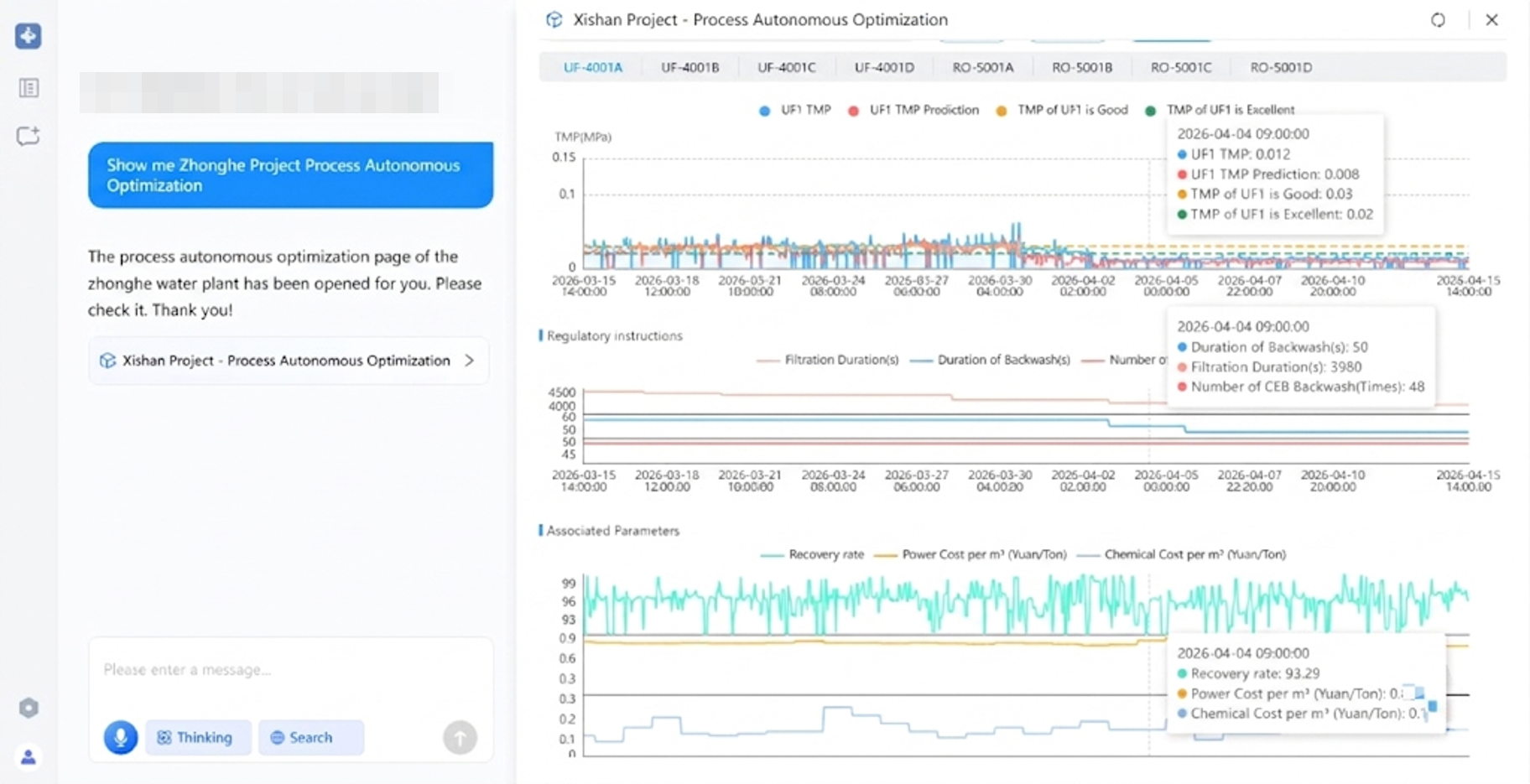
Predicts TMP trends, evaluates operating quality and recommends filtration, backwash and recovery-rate adjustments to stabilize output.
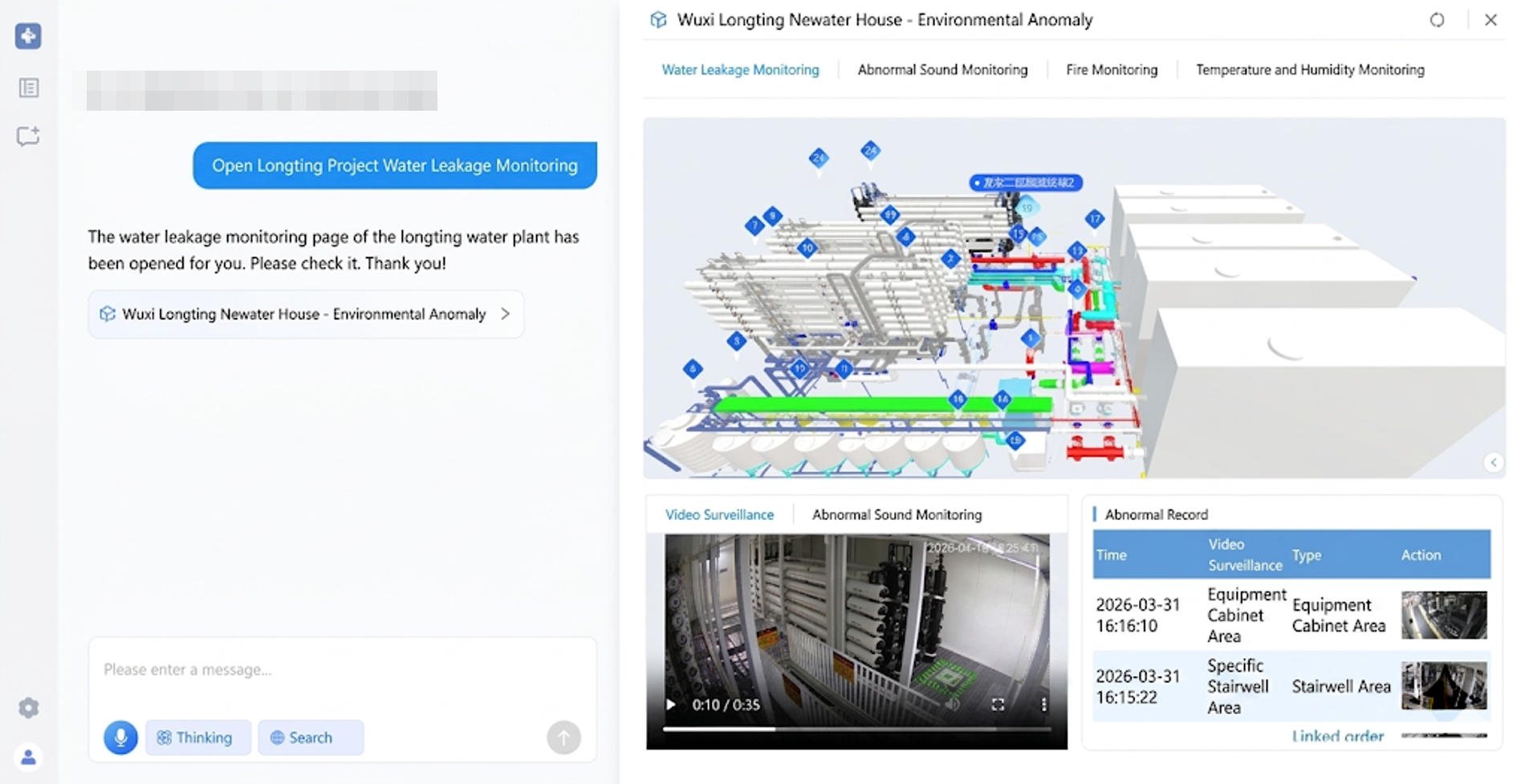
Links 3D plant models, video surveillance and abnormal-event records for leakage, sound, fire, temperature and humidity monitoring.
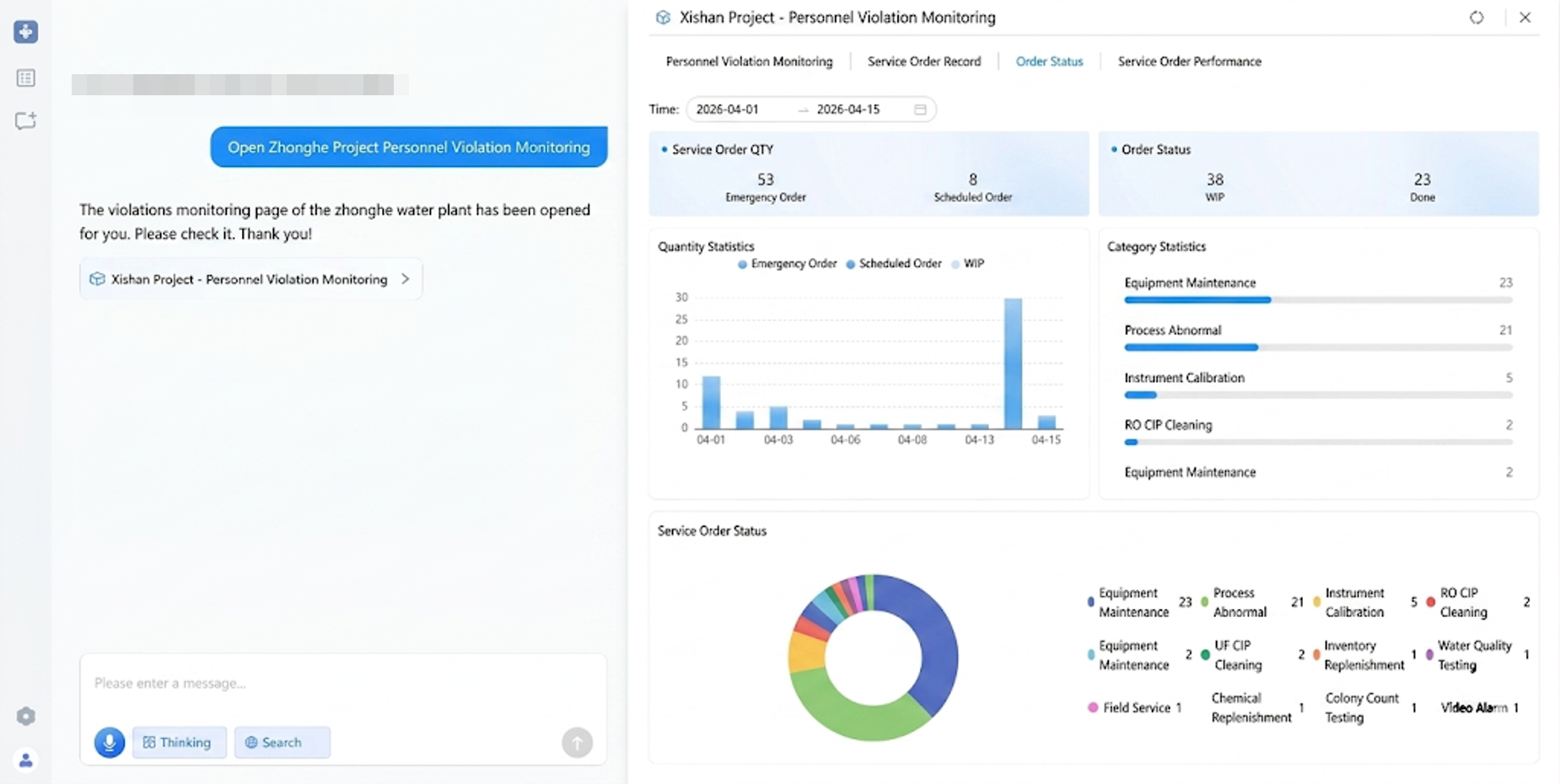
Tracks emergency and scheduled orders, work-in-progress status, maintenance categories and service performance in one dashboard.
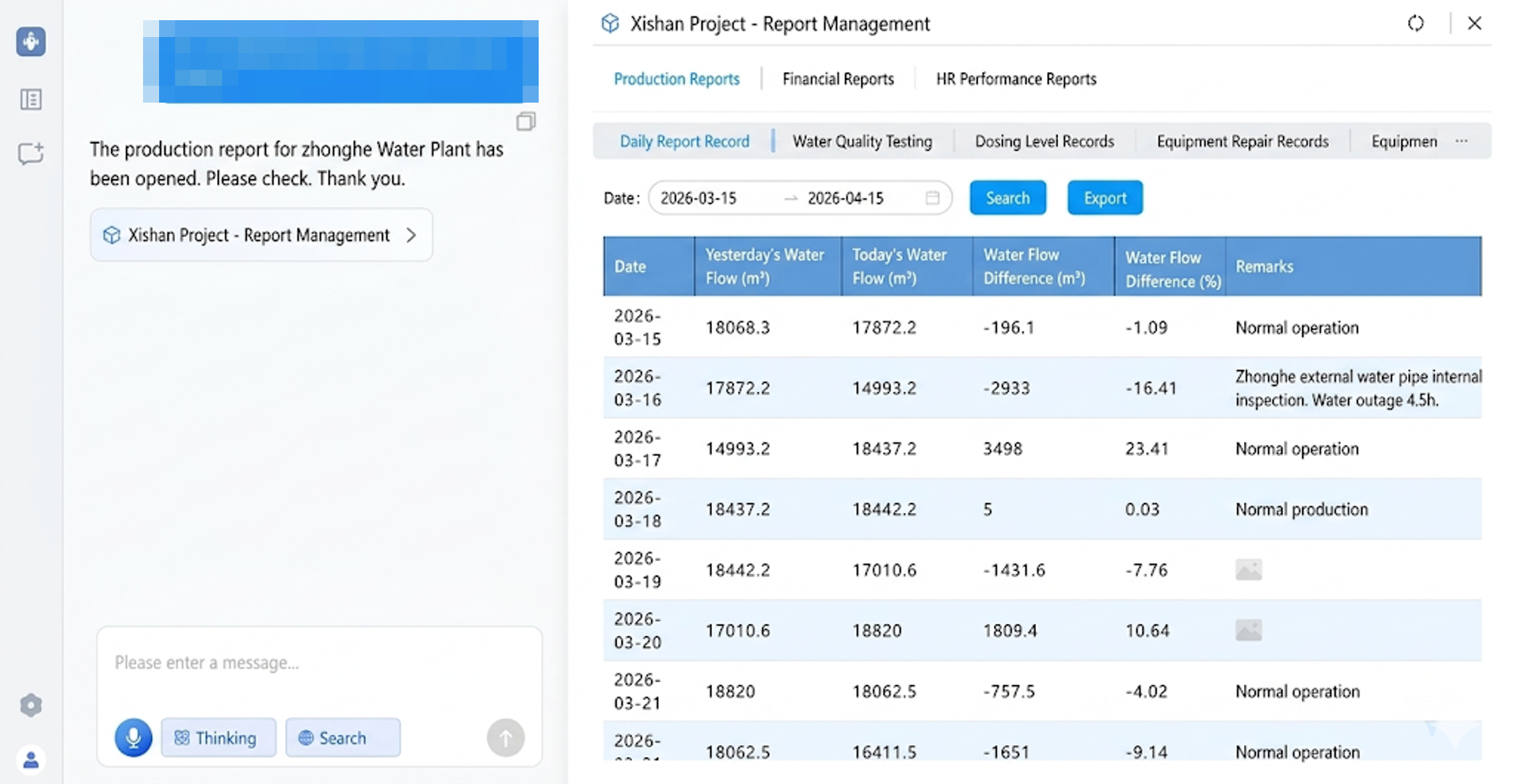
Generates operational reports for production records, water quality testing, dosing levels and equipment repair history.
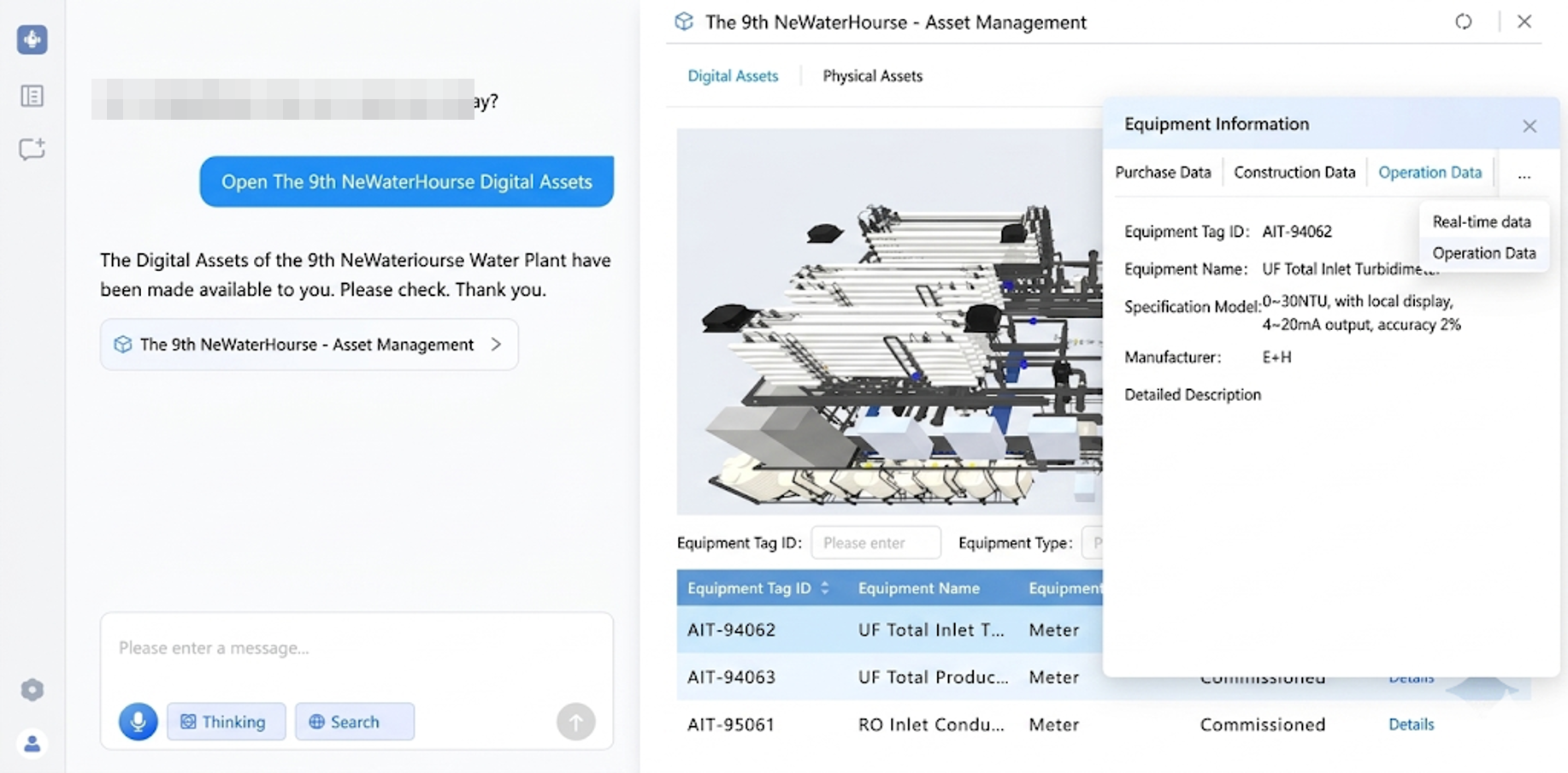
Connects digital assets with equipment tags, purchase data, construction data and real-time operation records.
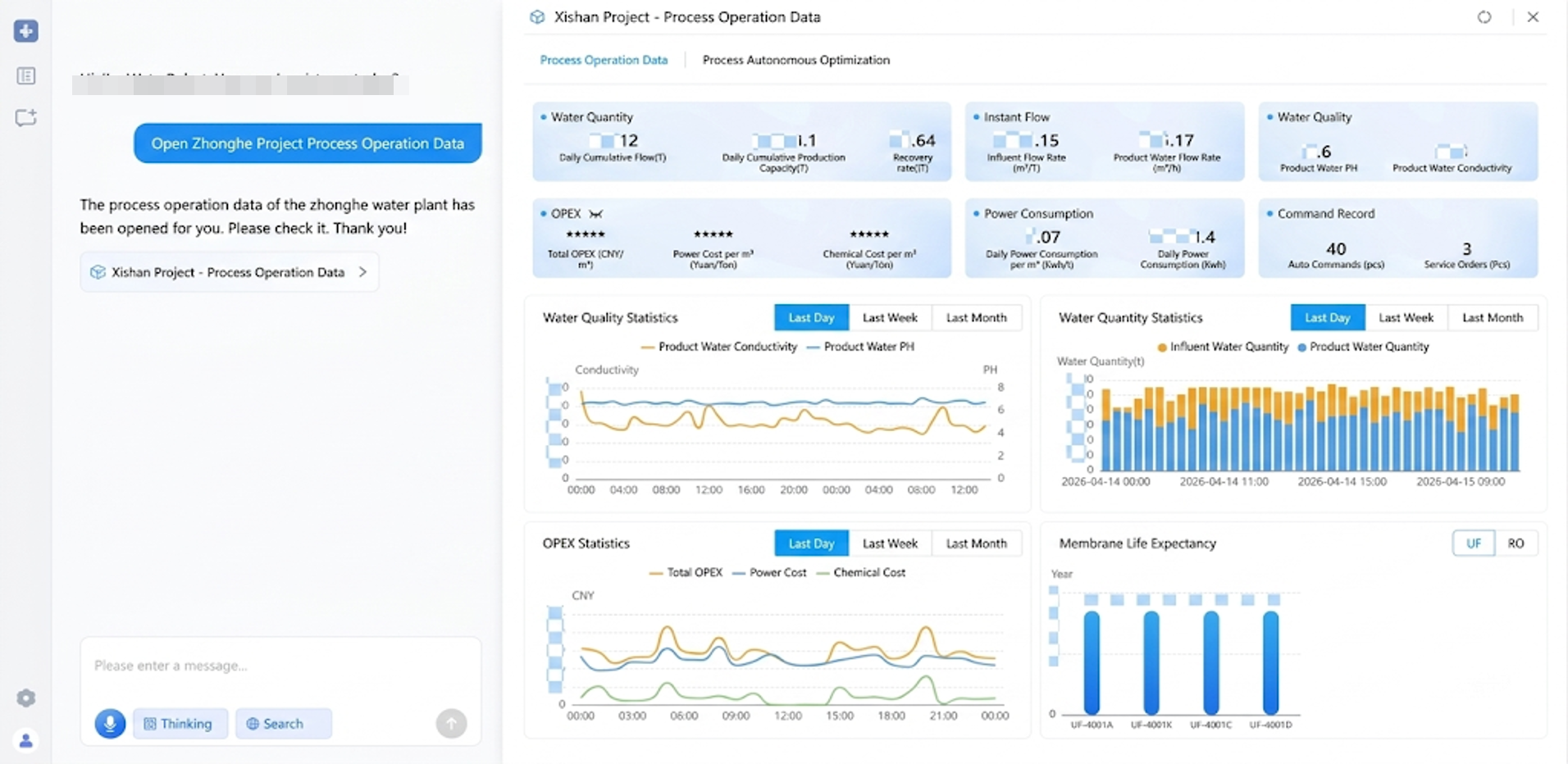
Allows operators to open project pages, query process data and navigate complex plant functions through natural-language commands.
The architecture is organized as a vertical intelligence stack: field data is captured at the plant edge, interpreted by process AI, then coordinated through cloud-based fleet learning.
1,000+ sensors per plant capture water quality, equipment health, pressure, flow, gas risk and safety signals with sub-second local preprocessing.
Real-time neural network inference converts sensor data into automated control loops, dosing decisions, alarm prioritization and rapid actuation response.
Fleet-level learning, model updates, remote supervision, compliance reporting and cross-site optimisation create a continuously improving water operations network.
Flow rates, chemical concentrations, turbidity, conductivity, pH and additional parameters across all treatment stages.
Vibration, temperature, current draw and performance degradation signals from pumps, membranes, valves and actuators.
Audit trail of effluent quality measurements, compliance status and regulatory reporting requirements.
Automated control actions, their triggering conditions and observed outcomes.
Structured records of process deviations, equipment faults and near-misses.
Anonymised insights aggregated across deployments, helping each new installation benefit from collective learning.